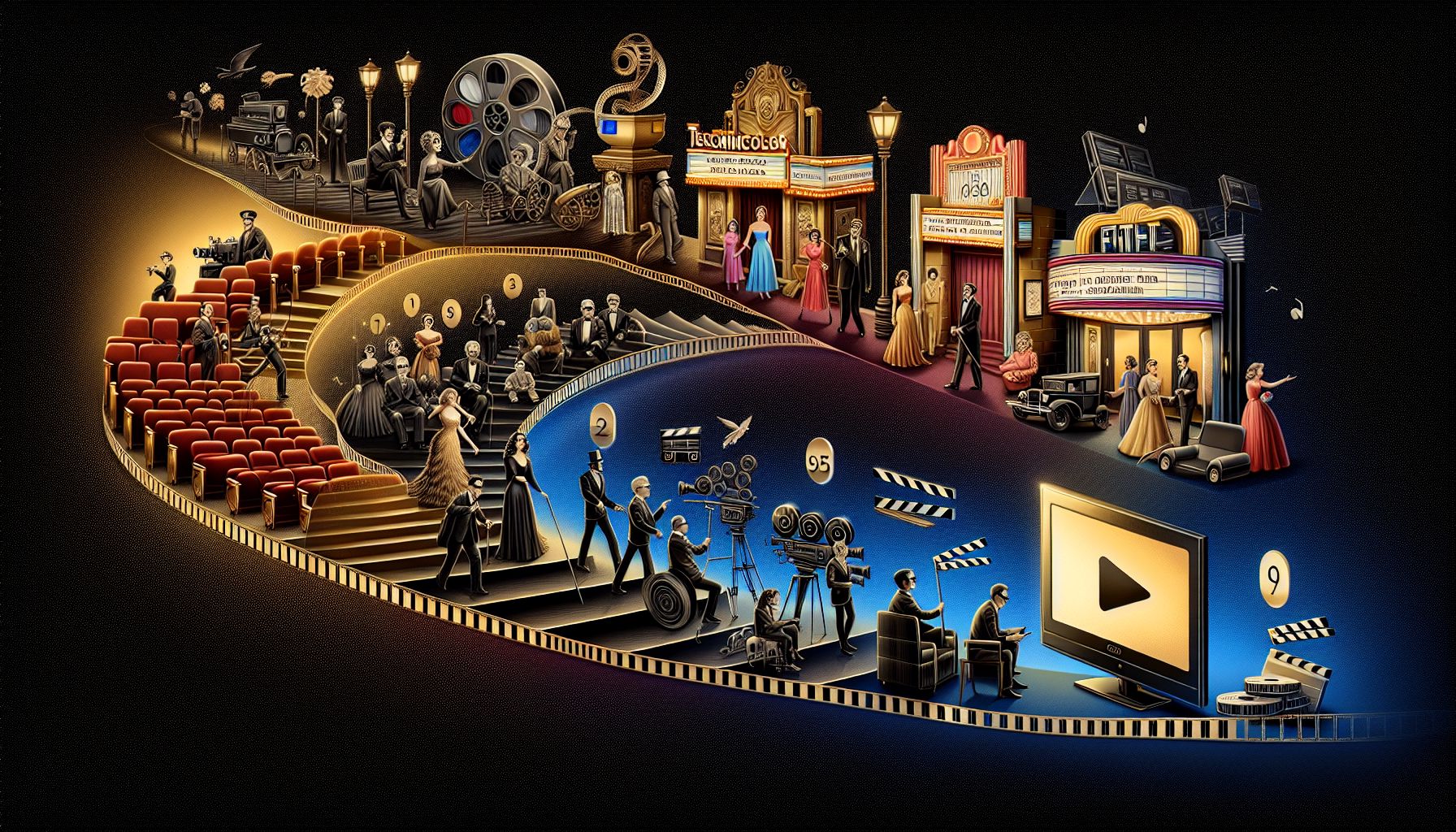
Discover how cinema has evolved over time, transforming from a simple form of entertainment into an influential medium of art.
Let us embark on a journey back in time—an expedition through the ages to revisit the magical world of the silver screen.
The Muted Beginnings
The origins of cinema date back to the dawn of the 20th century, embodying a blend of technology, art, and human curiosity. The Lumiere brothers, the pioneers of cinema, screened their first film in 1895—sending shockwaves through a world of eager spectators. These early films—short, silent, and black and white—seduced the masses with the sheer novelty of moving pictures.
The Silent Era, as it was aptly named, was all about pantomime, exaggerated gestures, and slapstick humor. During this time, the cinema was merely perceived as a source of entertainment, with iconic figures such as Charlie Chaplin and Buster Keaton, animating the screens and tickling our funny bones.
The Golden Age: Cinema finds its Voice and Color
Contrary to the muted beginnings, the 1920s ushered in the era of “talkies”. The Jazz Singer (1927) broke the silence within the cinema, introducing synchronized sound to the big screen—revolutionizing the way stories were told.
In 1930, the first full-length Technicolor film, Becky Sharp, painted the silver screen with splashes of vibrant hues. Cinema had found its voice and color, and it was more enchanting than ever.
This period marked the emergence of various genres: comedy, romance, western, and film-noir; and saw the rise of tinsel town’s brightest stars: Humphrey Bogart, Ingrid Bergman, Audrey Hepburn, and many more. Cinema had now transcended mere amusement—it was cementing itself as a pivotal part of popular culture.
New Wave: Cinema as Art and a Vehicle for Social Commentary
The late 1950s and 1960s brought the ‘New Wave’—a cinematic movement that rocked the very foundations of traditional storytelling. Directors began experimenting with narrative structures and cinematic techniques, aiming for a more realistic and artistic representation. This movement also championed the use of cinema as a medium for social commentary.
This era birthed true cinematic masterpieces such as Jean-Luc Godard’s Breathless and Francois Truffaut’s The 400 Blows. These films challenged the status quo and pushed the boundaries of cinema, endeavoring to mirror society and inspire social change.
The Digital Revolution: Cinema in the Age of Technology
From the late 20th century to the present, cinema witnessed an unprecedented transformation, facilitated by groundbreaking advancements in technology. The arrival of digital cinema, CGIs, and stunning special effects opened the gateway to a universe of unlimited possibilities.
It wasn’t just the technological advancements that redefined cinema during this period. Radical shifts in the narrative, genre-blending, and a growing emphasis on diversity and representation all played pivotal roles in molding contemporary cinema.
Movies like The Matrix, Avatar, and Marvel’s cinematic universe sculpt intricate worlds and tell compelling stories that were once thought impossible. Similarly, films such as Moonlight, Parasite, and Get Out challenge conventional storytelling and explore pressing social issues—amplifying marginalized voices and promoting inclusion.
Conclusion: Cinema as a Reflection of Society
From its humble beginnings to its present-day avatar—cinema has grown manifold, evolving into a robust form of art that resonates with hundreds of millions worldwide.
In its metamorphosis, the silver screen not only reflects the sophistication in film production but also the societal evolution over the decades. It has turned into a mirror of society—highlighting its triumphs and exposing its flaws.
The journey of cinema is an extraordinary one, illustrating human creativity and technological advancement. It teaches us that art and technology, when woven together seamlessly, have the capacity to captivate, educate, and most importantly, inspire.
So, the next time you nestle into a movie theater or settle in front of your streaming platform—remember the magic, the evolution, and the power of cinema. After all, life, as Oscar Wilde famously said, imitates art!